
When someone passes away, one of the first decisions families face is how to honor them. The problem? Terms like memorial service and celebration of life are often used interchangeably, even though they’re not the same thing.
Choosing the wrong format doesn’t just create confusion. It can leave guests emotionally disconnected, unsure how to behave, or feeling like the service didn’t truly reflect the person being honored.
This guide breaks down the real difference between a memorial service vs. a celebration of life, explains when each one makes sense, and helps you choose based on purpose; not pressure or trends.
Memorial Service vs. Celebration of Life: The Core Difference
At their core, these two gatherings serve different emotional functions.
- A memorial service centers on acknowledging loss and supporting collective grief.
- A celebration of life focuses on remembering the person’s personality, values, and legacy.
Neither option is inherently better. What matters is whether the format matches the emotional needs of the moment.
What Is a Memorial Service?
A memorial service is a structured gathering held to honor someone who has passed away, usually without the body present. It can take place days or even weeks after death and often follows traditional or religious customs.
Common Characteristics of a Memorial Service
- Formal or semi-formal setting
- Religious, spiritual, or ceremonial elements
- Eulogies, readings, or prayers
- Quiet or reflective music
- A calm, serious tone
This type of service provides space for grief. It gives attendees permission to feel sadness openly rather than suppressing it.
When a Memorial Service Makes the Most Sense
A memorial service is usually the better choice when:
- The loss is recent or unexpected
- Family members are still emotionally raw
- Cultural or religious traditions are important
- Guests expect structure and ritual
In these situations, skipping straight to a lighter event can feel emotionally premature, even if the intention is positive.
What Is a Celebration of Life?
A celebration of life is a more informal event designed to honor who the person was, rather than focusing on their death. These gatherings often emphasize storytelling, shared memories, and personal expression.
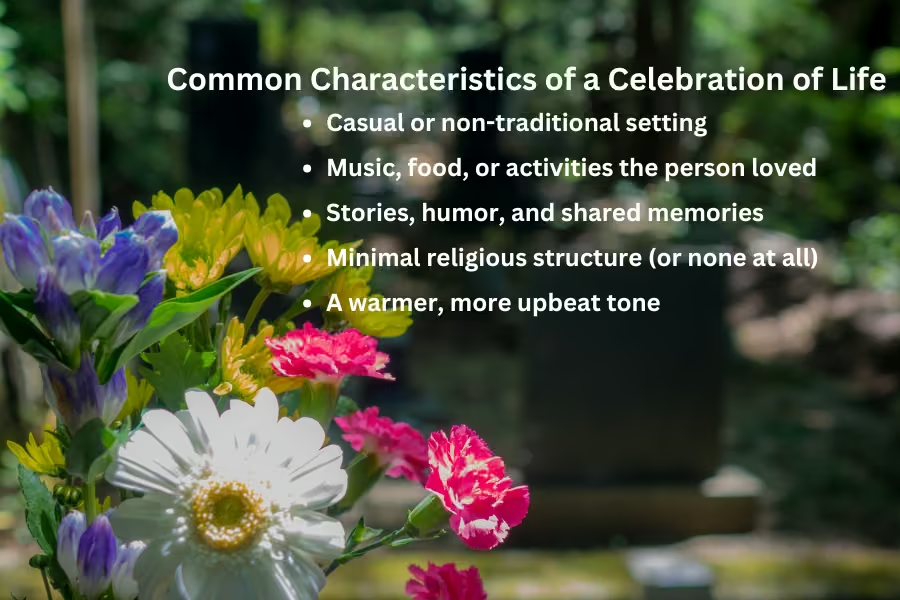
Common Characteristics of a Celebration of Life
- Casual or non-traditional setting
- Music, food, or activities the person loved
- Stories, humor, and shared memories
- Minimal religious structure (or none at all)
- A warmer, more upbeat tone
That said, “upbeat” doesn’t mean grief-free. It means grief isn’t the centerpiece.
If you’re looking for inspiration on how these events are typically structured, this guide on celebration of life ideas offers practical examples that work in real-life settings.
The Biggest Mistake People Make When Choosing
Many families default to a celebration of life because it sounds more positive or modern.
That’s not a thoughtful decision, that’s emotional avoidance.
If attendees are still processing shock or loss, a forced celebratory tone can feel uncomfortable or even disrespectful. People don’t stop grieving just because the event title sounds cheerful.
On the flip side, insisting on a traditional memorial service when the group is ready to reflect and reconnect can feel unnecessarily heavy.
Timing matters more than labels.
How to Choose Between a Memorial Service and a Celebration of Life
Instead of asking which option sounds nicer, ask which one fits the situation.
1. Consider Emotional Readiness
Ask yourself:
- Are people still in shock?
- Is this loss recent?
- Do attendees need structure to process emotions?
If yes, a memorial service is usually the better option.
If time has passed and emotions are less raw, a celebration of life may feel more natural and meaningful.
2. Think About the Audience
The service is for the living, not just the deceased.
Consider:
- Age range of attendees
- Cultural expectations
- Religious backgrounds
A memorial service often provides comfort through familiarity, especially for older or faith-based guests. A celebration of life may resonate more with close friends or informal communities.
Ignoring the audience almost always leads to emotional disconnect.
3. Reflect the Person Honestly
Avoid reducing someone to a single trait.
A person can be joyful and deserving of a solemn farewell. They can be informal and meaningful without turning the event into a party.
Choose a format that reflects their values, not just their hobbies or sense of humor.
Can You Have Both?
Yes, and in many cases, that’s the smartest option.
A common and effective approach is:
- Hold a memorial service first for collective grief and closure
- Plan a celebration of life later, once emotions are less intense
Trying to merge both into one event often results in mixed signals and emotional confusion.
Spacing them out allows each gathering to serve its purpose properly.
Practical Differences to Consider (That People Overlook)
Cost and Logistics
- Memorial services are often simpler and more affordable
- Celebrations of life can quietly become expensive due to venues, catering, and activities
When emotions are high, simpler logistics can be a relief.
Language and Invitations
Words matter more than people think.
Use “memorial service” if:
- The tone is reflective
- There will be prayer or readings
- Formal attire is expected
Use “celebration of life” if:
- Casual dress is encouraged
- Storytelling is central
- The focus is on memories and legacy
Mixing the language creates confusion and mismatched expectations.
What Both Events Have in Common
Regardless of format, meaningful gatherings usually include:
- Thoughtful words or tributes
- Personal elements that reflect the individual
- Space for emotion (whatever form it takes)
If you’re preparing remarks or written tributes, this guide on how to write a meaningful memorial tribute can help avoid clichés and empty phrases.
For families looking to continue remembrance beyond the event, these memorial keepsake ideas offer lasting, tangible ways to honor someone.
There’s No “Correct” Choice—Only an Appropriate One
The debate around memorial service vs. celebration of life isn’t about tradition versus modernity. It’s about emotional accuracy.
Choose a memorial service when people need space to grieve.
Choose a celebration of life when people are ready to remember with warmth.
Choose both if the situation calls for it, but don’t rush the process.
A well-chosen format doesn’t erase pain. It helps people carry it – together.